
Customer / Rider Applications
Booking, account, saved details, trip status, communication, payments, history, and service interactions.
Rider and driver applications, dispatch portals, booking engines, payments, fare logic, maps and tracking, notifications, CRM, analytics, customer support, and live operations.
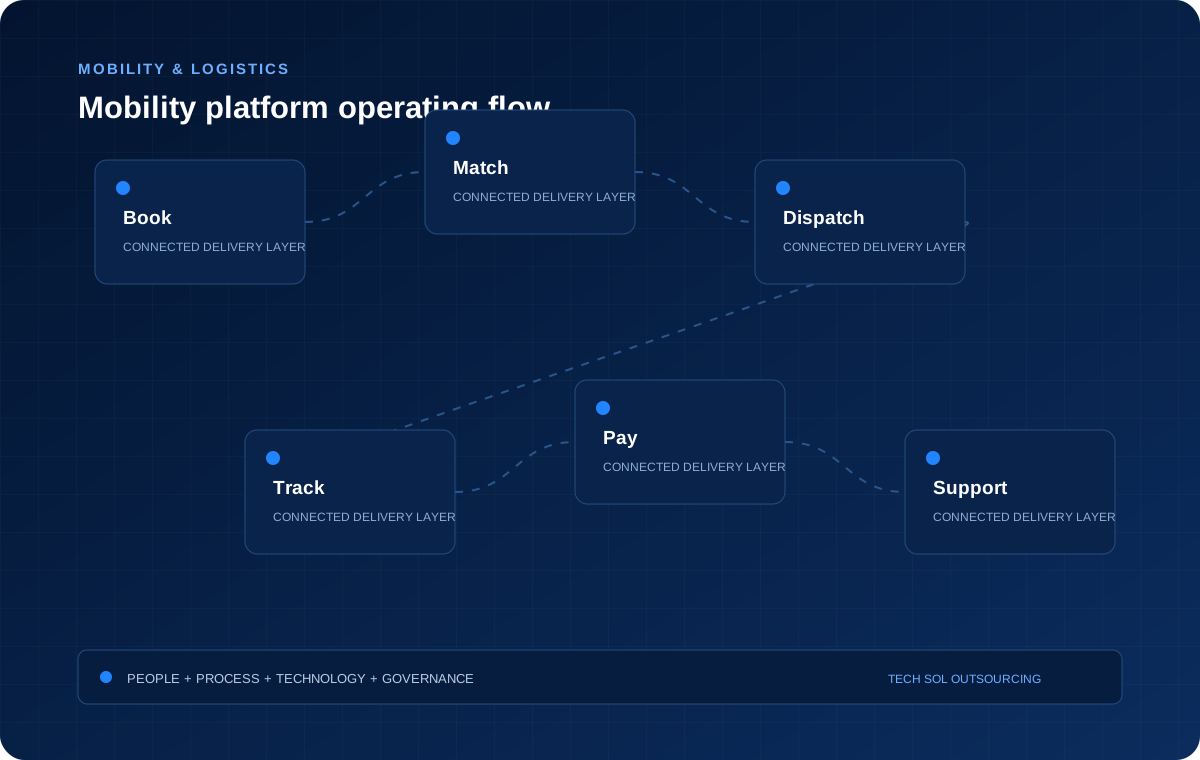
Each capability is defined as part of a larger delivery system. Scope can begin narrowly without pretending the neighboring dependencies do not exist.
Booking, account, saved details, trip status, communication, payments, history, and service interactions.
Availability, trip offers, navigation, status, earnings, documents, communication, and operational workflows.
Live jobs, driver assignment, manual intervention, status, exceptions, communication, and operational visibility.
Service types, availability, distance/time inputs, pricing rules, surcharges, quotes, booking states, and modifications.
Geocoding, route/location services, live status, ETA, zones, tracking, and map-based operations.
Payment-provider integrations, authorizations, capture, refunds, receipts, and payout-supporting workflows.
Customer, driver/provider, booking, issue, account, reporting, and operational administration.
Dispatch assistance, customer/driver communication, exception handling, booking support, and back-office coordination.
Select a stage or solution type. The panel changes immediately, because interactivity should be visible rather than hiding somewhere below six screens of static cards.
Create a reliable booking state from quote through confirmation with service, location, schedule, price, and customer context.
Assign the appropriate driver/provider through automated or human-assisted dispatch logic with clear exceptions.
Keep rider, driver, dispatch, and support views synchronized around trip status and location events.
Handle payment authorization, capture, adjustments, refunds, receipts, and payout-related states with traceability.
Give operations enough visibility and authority to resolve cancellations, no-shows, route issues, driver/rider problems, and booking changes.
Delivery quality depends on the interfaces between design, technology, people, controls, and operating responsibility.
Web/mobile booking, account, notifications and support.
Availability, assignment, navigation, trip states and earnings.
Matching, manual control, zones, queues and exceptions.
Bookings, pricing, payments, location, identity and messaging.
Customers, drivers, trips, issues, configuration and reporting.
Dispatch support, customer service, incident handling and analytics.
The engagement moves from current-state understanding to architecture, controlled implementation, evidence-based verification, and an explicit operating handoff.
Inspect the current workflow, systems, dependencies, constraints, risks, and evidence.
Define target architecture, responsibilities, states, interfaces, acceptance criteria, and rollout.
Deliver controlled increments, keep working paths visible, and remove obsolete logic where replacement is required.
Test the real user path, document remaining risks, establish monitoring/support, then scale.
Technology and operational services need explicit proof standards, not decorative diagrams and the phrase “best practices” arranged tastefully around them.
Rider, driver, dispatch, payment, and admin systems need a coherent trip/booking state model.
Maps, payments, notifications, identity, and external services require timeout, retry, reconciliation, and fallback behavior.
Automated matching and pricing should preserve controlled human intervention for exceptional cases.
Live operations need current status, aging, exceptions, and system health rather than delayed reports after the issue is over.
Most business systems cross product, infrastructure, data, people, and operations. These related practices can be combined without forcing a monolithic engagement.
Scope should become clearer before implementation starts, not after invoices and architectural archaeology have already accumulated.
Yes, the scope can include customer/rider, driver/provider, dispatch, admin, booking, payments, tracking, communication, and operating workflows. Exact features depend on the business model.
Yes. Pricing can combine distance, time, service type, zones, minimums, surcharges, waiting, scheduled rules, and other approved business logic.
Yes. A well-designed dispatch architecture should support controlled manual intervention rather than assuming automation resolves every exception.
Yes, through product engineering, DevOps, managed applications, customer/technical support, and dispatch/operations services.
Start with the current state, desired outcome, constraints, and systems already in place.
Share the workflow, product, infrastructure, or capacity requirement. When deployed with the configured Worker and D1 binding, this form submits securely to the website inquiry API.