
Progressive Web Apps
Installable, responsive applications with web reach and app-like behavior.
Progressive Web Apps, web platforms, mobile applications, SaaS products, portals, e-commerce, APIs, and internal systems designed as maintainable products rather than one-off screens.
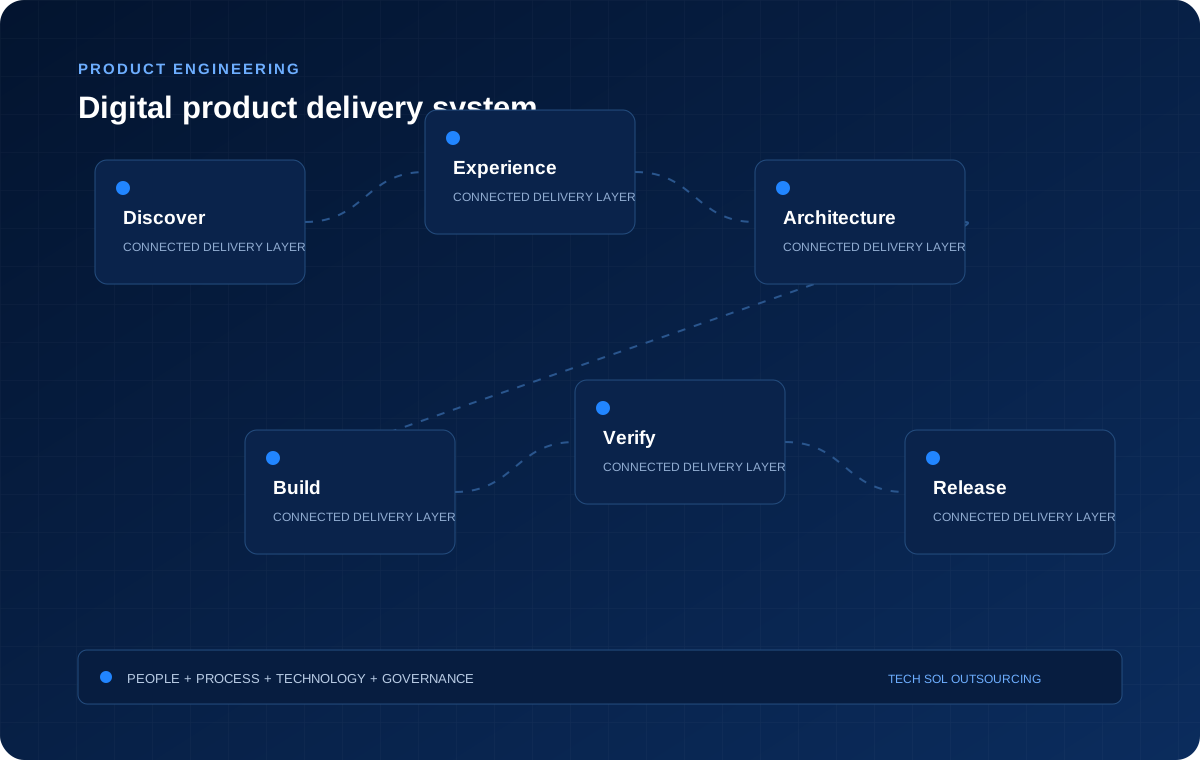
Each capability is defined as part of a larger delivery system. Scope can begin narrowly without pretending the neighboring dependencies do not exist.
Installable, responsive applications with web reach and app-like behavior.
Customer-facing and internal browser applications with structured business logic.
Cross-platform mobile products for customers, teams, field staff, and operations.
Multi-workflow product platforms, dashboards, account systems, and subscription-ready foundations.
Commerce experiences, catalog logic, checkout integrations, account journeys, and operational tooling.
Client portals, admin consoles, dashboards, workflow tools, and operational interfaces.
APIs and integrations connecting products to CRM, payments, communication, data, and external services.
Incremental modernization of older interfaces, applications, architecture, and release workflows.
This directory preserves the concrete services behind the broader capability map. Expand a group to review exactly what is included instead of relying on a decorative umbrella label.
General technology consulting, product engineering, and digital solutions.
Installable, responsive web applications with app-like user experiences and offline-capable architecture where appropriate.
Custom website design, development, and web application development.
Customer, workforce, operational, and cross-platform mobile application development.
Custom software products and business applications.
CRM development, customization, workflow management, reporting, and lead tracking.
Ecommerce websites, platforms, integrations, and online retail solutions.
Select a stage or solution type. The panel changes immediately, because interactivity should be visible rather than hiding somewhere below six screens of static cards.
A strong option when installability, responsive reach, fast iteration, and one web-delivered product matter.
Browser-based applications designed for customer workflows, internal operations, reporting, or complex business processes.
Mobile products designed around touch-first customer, workforce, field, dispatch, or marketplace workflows.
Product architecture for recurring workflows, multiple account states, administration, integrations, and scalable delivery.
Commerce systems that connect customer experience with catalog, checkout, CRM, automation, operations, and reporting.
Internal tools built around the people doing the work, replacing spreadsheet sprawl and disconnected operational steps.
Delivery quality depends on the interfaces between design, technology, people, controls, and operating responsibility.
Requirements, users, constraints, workflows, systems, risks.
Information architecture, journeys, states, interface behavior.
Data, APIs, authentication, deployment, integrations, observability.
Working slices delivered in controlled increments.
Functional, responsive, accessibility, integration, and failure-path testing.
Deployment, monitoring, handover, maintenance, iteration.
The engagement moves from current-state understanding to architecture, controlled implementation, evidence-based verification, and an explicit operating handoff.
Inspect the current workflow, systems, dependencies, constraints, risks, and evidence.
Define target architecture, responsibilities, states, interfaces, acceptance criteria, and rollout.
Deliver controlled increments, keep working paths visible, and remove obsolete logic where replacement is required.
Test the real user path, document remaining risks, establish monitoring/support, then scale.
Technology and operational services need explicit proof standards, not decorative diagrams and the phrase “best practices” arranged tastefully around them.
Layouts are designed for desktop, tablet, and narrow mobile states without relying on accidental wrapping.
Keyboard behavior, focus states, labels, readable structure, and reduced-motion fallbacks are part of the frontend definition.
Components, data contracts, validation, and deployment responsibilities remain explicit.
Logging, analytics, error handling, and support paths are considered before release, not after the first mysterious outage.
Most business systems cross product, infrastructure, data, people, and operations. These related practices can be combined without forcing a monolithic engagement.
Scope should become clearer before implementation starts, not after invoices and architectural archaeology have already accumulated.
Yes. The scope can begin with a defined minimum viable workflow while preserving an architecture that can evolve rather than requiring a complete rewrite.
Yes. Product delivery can include user interfaces, APIs, data persistence, integrations, authentication, deployment, and operating support.
It can, depending on product requirements. The architecture should be chosen around required device capabilities, distribution, offline behavior, performance, and future product plans.
Yes, after an audit identifies architecture, dependencies, security, testing, and deployment constraints.
Start with the current state, desired outcome, constraints, and systems already in place.
Share the workflow, product, infrastructure, or capacity requirement. When deployed with the configured Worker and D1 binding, this form submits securely to the website inquiry API.