
CI/CD & Release Engineering
Pipeline architecture, build automation, testing gates, artifacts, deployment automation, progressive delivery, and rollback.
CI/CD, infrastructure as code, cloud automation, Kubernetes, GitOps, platform engineering, DevSecOps, observability, SRE, FinOps, disaster recovery, and managed DevOps.
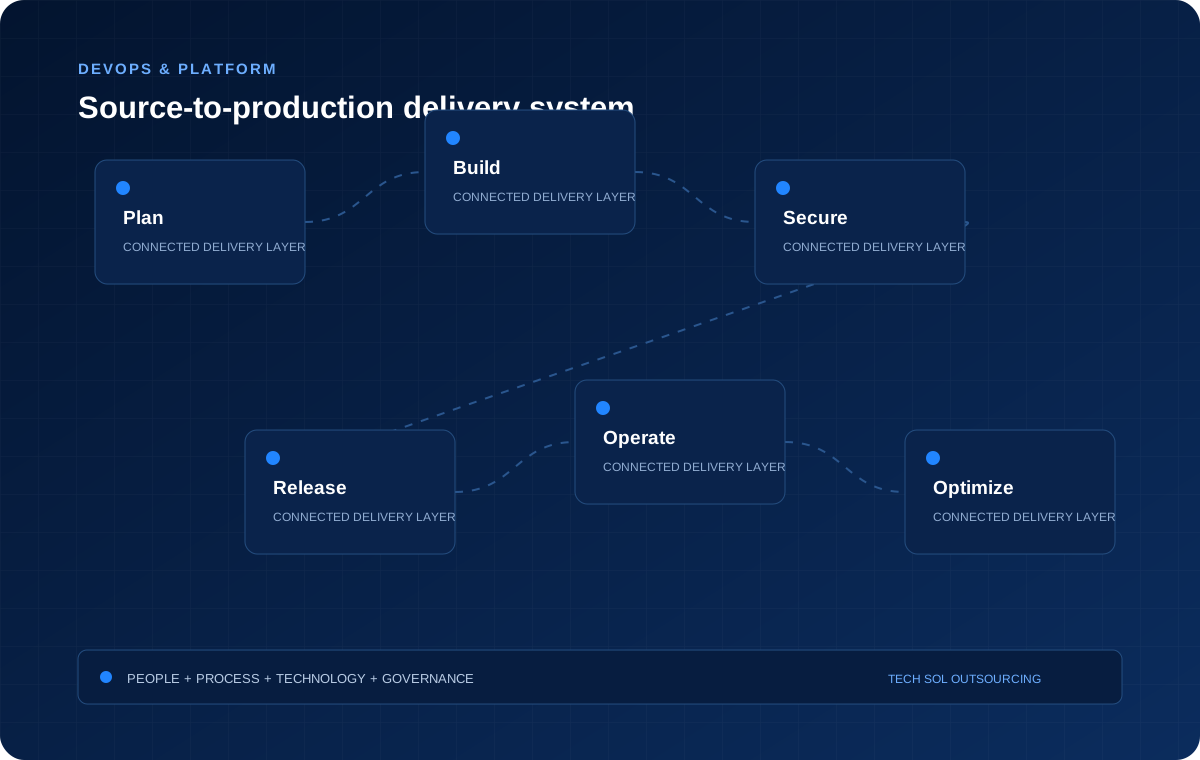
Each capability is defined as part of a larger delivery system. Scope can begin narrowly without pretending the neighboring dependencies do not exist.
Pipeline architecture, build automation, testing gates, artifacts, deployment automation, progressive delivery, and rollback.
Terraform and infrastructure automation for repeatable environments, configuration, and change review.
Docker, Kubernetes engineering, managed Kubernetes, workload operations, scaling, and cluster reliability.
Internal developer platforms, paved roads, reusable environments, service templates, and developer experience.
Security testing in CI/CD, policy as code, secrets, supply-chain controls, and Kubernetes security.
Metrics, logs, traces, SLOs, incident response, reliability engineering, and production feedback loops.
Cloud-native architecture, multi-cloud operations, capacity, cost governance, and optimization.
High availability, backup automation, disaster recovery, recovery testing, and operational runbooks.
This directory preserves the concrete services behind the broader capability map. Expand a group to review exactly what is included instead of relying on a decorative umbrella label.
Assess delivery workflows, tooling, environments, bottlenecks, reliability risks, and DevOps maturity.
Define a phased operating and technology roadmap for adopting DevOps practices across teams and systems.
Benchmark current capabilities across source control, CI/CD, infrastructure, security, observability, reliability, and governance.
Design cloud-native delivery patterns, platform boundaries, service architecture, and operational guardrails.
Measure deployment frequency, lead time, change failure rate, recovery time, and delivery-flow bottlenecks.
Design and implement automated continuous integration and continuous delivery pipelines.
Automate compilation, packaging, dependency handling, quality gates, and repeatable build processes.
Automate controlled application releases, approvals, promotions, rollback paths, and release orchestration.
Integrate unit, integration, security, performance, and regression testing into delivery pipelines.
Implement and manage package, container, binary, and artifact repositories across delivery environments.
Implement blue-green, canary, phased, and traffic-shift deployment patterns to reduce release risk.
Use feature flags and controlled rollout strategies to separate deployment from feature exposure.
Define infrastructure through version-controlled code for repeatable provisioning, review, and recovery.
Automate cloud infrastructure provisioning and lifecycle management using Terraform and compatible tooling.
Standardize and automate server, application, and environment configuration across infrastructure estates.
Create consistent development, test, staging, and production environments with controlled promotion paths.
Implement cloud delivery pipelines, infrastructure automation, observability, security, and operating practices.
Coordinate deployment, governance, observability, and automation across multiple cloud and on-premise environments.
Modernize applications and delivery practices while migrating workloads into cloud-native environments.
Connect cloud usage, delivery architecture, capacity, and cost controls to engineering decisions.
Automate application, infrastructure, and data backup workflows with tested restoration procedures.
Automate recovery environments, failover procedures, infrastructure recreation, and recovery validation.
Containerize applications and supporting services for repeatable development, deployment, and scaling.
Design, deploy, secure, scale, upgrade, and operate Kubernetes platforms and workloads.
Provide ongoing cluster operations, upgrades, capacity management, security, and workload support.
Manage infrastructure and application deployment through declarative, version-controlled Git workflows.
Build shared engineering platforms that standardize deployment, infrastructure, observability, and developer workflows.
Create self-service internal platforms for environments, deployments, services, templates, and operational workflows.
Reduce engineering friction through standardized tooling, automation, templates, documentation, and self-service workflows.
Implement service-to-service networking, traffic policy, observability, resilience, and identity controls.
Integrate security controls, testing, policy, and remediation into development and delivery workflows.
Embed SAST, DAST, dependency, secret, container, and infrastructure security testing into pipelines.
Codify technical and compliance policies so controls can be checked automatically during delivery.
Secure application secrets, credentials, certificates, rotation, access, and delivery automation.
Protect source, dependencies, build systems, artifacts, registries, provenance, and deployment paths.
Harden images, registries, runtime policies, clusters, namespaces, access, and workload configurations.
Implement service, infrastructure, application, and user-experience monitoring with actionable alerting.
Aggregate, structure, retain, search, and alert on logs across applications and infrastructure.
Trace requests across distributed services to diagnose latency, failures, and dependency behavior.
Apply reliability engineering, SLOs, error budgets, automation, and operational design to production services.
Design alert routing, response playbooks, escalation, incident coordination, and post-incident learning.
Design systems for redundancy, fault tolerance, graceful degradation, resilience, and high availability.
Measure and improve application, infrastructure, database, and platform performance and scaling behavior.
Provide ongoing CI/CD, cloud, platform, monitoring, release, automation, and reliability operations.
Use automation and machine-assisted analysis to reduce repetitive operational work and surface anomalies.
Automate schema changes, database release workflows, validation, rollback planning, and migration controls.
Build repeatable AI/ML model packaging, deployment, monitoring, versioning, and retraining pipelines.
Provide DevOps, cloud, platform, SRE, Kubernetes, and automation specialists to augment client teams.
Select a stage or solution type. The panel changes immediately, because interactivity should be visible rather than hiding somewhere below six screens of static cards.
Assess delivery paths, repositories, environments, bottlenecks, ownership, security, reliability targets, and cloud constraints.
Make environments and builds repeatable with automation, IaC, containers, configuration, and reusable platform components.
Embed controls into the delivery path so security is continuously evaluated instead of left to a final gate.
Create predictable promotion, approval, deployment, artifact, migration, rollback, and progressive-delivery paths.
Instrument production, define reliability targets, manage incidents, and reduce unknown failure states.
Improve reliability, capacity, developer flow, cost, recovery, and platform efficiency using production evidence.
Delivery quality depends on the interfaces between design, technology, people, controls, and operating responsibility.
Repositories, branching, dependencies, code quality and ownership.
Build, test, scan, package, promote and approval logic.
Cloud, networking, IaC, containers, clusters and secrets.
Deployment strategy, migrations, feature exposure and rollback.
Metrics, logs, traces, SLOs and alert quality.
Incident handling, recovery, capacity, cost and continuous improvement.
The engagement moves from current-state understanding to architecture, controlled implementation, evidence-based verification, and an explicit operating handoff.
Inspect the current workflow, systems, dependencies, constraints, risks, and evidence.
Define target architecture, responsibilities, states, interfaces, acceptance criteria, and rollout.
Deliver controlled increments, keep working paths visible, and remove obsolete logic where replacement is required.
Test the real user path, document remaining risks, establish monitoring/support, then scale.
Technology and operational services need explicit proof standards, not decorative diagrams and the phrase “best practices” arranged tastefully around them.
Environments and releases should be reproducible rather than dependent on undocumented manual sequences.
Testing, scanning, approvals, progressive delivery, rollback, and observability reduce release risk.
SLOs, incident data, performance, and delivery metrics make reliability an engineering discipline.
Platform automation should remove toil without hiding important system behavior from engineering teams.
Most business systems cross product, infrastructure, data, people, and operations. These related practices can be combined without forcing a monolithic engagement.
Scope should become clearer before implementation starts, not after invoices and architectural archaeology have already accumulated.
Yes. An audit can identify pipeline duplication, unreliable gates, slow builds, secret handling, deployment risk, and missing observability before changes are made.
Yes, including architecture, deployment, security, observability, managed Kubernetes, workload operations, and platform patterns.
No. Any organization operating applications, cloud infrastructure, integrations, data systems, or repeatable deployment workflows can benefit from DevOps practices.
Yes. Managed DevOps can cover ongoing pipeline, infrastructure, observability, incident, optimization, and platform responsibilities under a defined scope.
Start with the current state, desired outcome, constraints, and systems already in place.
Share the workflow, product, infrastructure, or capacity requirement. When deployed with the configured Worker and D1 binding, this form submits securely to the website inquiry API.