
MarTech Services
Marketing systems, campaign operations, analytics, automation, CRM connectivity, and technology enablement.
MarTech, digital marketing, automation, SEO, social, performance marketing, reputation, brand, CRO, analytics, and CRM-connected growth operations.
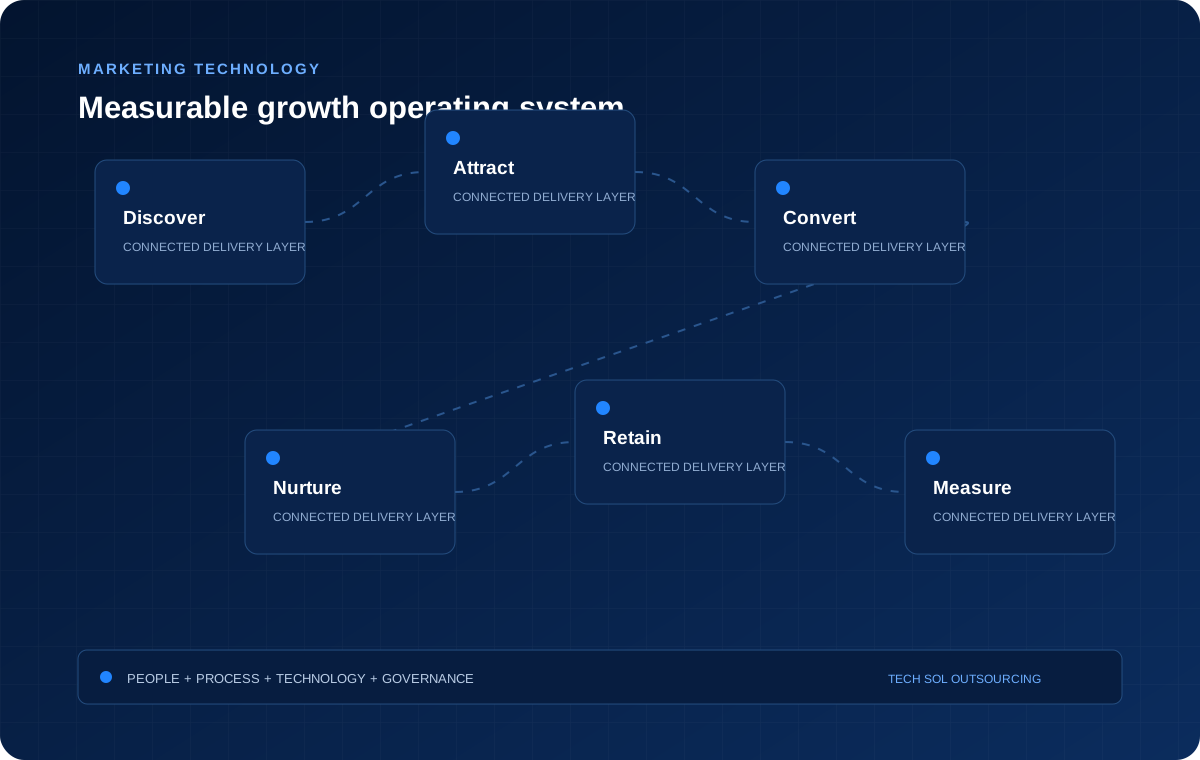
Each capability is defined as part of a larger delivery system. Scope can begin narrowly without pretending the neighboring dependencies do not exist.
Marketing systems, campaign operations, analytics, automation, CRM connectivity, and technology enablement.
Data-informed campaign planning and execution across appropriate channels.
Email, mobile, social, website, lead, CRM, and repetitive marketing workflow automation.
Technical, content, on-page, local, and authority-oriented organic search improvement.
Channel strategy, content operations, engagement, campaigns, and reporting.
Paid acquisition, lead generation, conversion tracking, experimentation, and optimization.
Monitoring, response workflows, brand visibility, and reputation improvement.
Positioning, creative systems, landing experiences, experimentation, and conversion-rate optimization.
This directory preserves the concrete services behind the broader capability map. Expand a group to review exactly what is included instead of relying on a decorative umbrella label.
Marketing technology, campaign management, content, analytics, and automation.
Data-driven digital marketing strategies and campaigns.
Automated email, mobile, social media, website, and repetitive marketing workflows.
Organic search visibility, ranking improvement, and SEO strategy.
Social media strategy, content, engagement, and campaign management.
Paid campaigns, lead generation, conversion tracking, and performance optimization.
Monitoring, improving, and protecting online brand reputation.
Brand positioning, creative strategy, identity, and promotional campaigns.
Improving website and campaign performance to generate more conversions.
Select a stage or solution type. The panel changes immediately, because interactivity should be visible rather than hiding somewhere below six screens of static cards.
Clarify audiences, demand, search intent, journeys, positioning, channel economics, and current measurement gaps.
Build organic and paid acquisition paths that connect to useful landing experiences and measurable source data.
Improve the path from visit or inquiry to meaningful conversion using UX, offer, copy, trust, and experiment design.
Connect CRM and automation to follow-up, segmentation, lifecycle communication, and sales handoff.
Support customer lifecycle, reputation, cross-sell, reactivation, and service communication.
Unify campaign, CRM, funnel, attribution, and business outcome reporting sufficiently to guide decisions.
Delivery quality depends on the interfaces between design, technology, people, controls, and operating responsibility.
Segments, intent, positioning, demand and message.
SEO, paid, social, content and landing experiences.
Forms, UX, offers, trust, CRO and experimentation.
CRM, automation, nurturing, sales handoff and retention.
Tracking, attribution, source quality and CRM outcomes.
Experiments, budget shifts, content improvements and automation refinement.
The engagement moves from current-state understanding to architecture, controlled implementation, evidence-based verification, and an explicit operating handoff.
Inspect the current workflow, systems, dependencies, constraints, risks, and evidence.
Define target architecture, responsibilities, states, interfaces, acceptance criteria, and rollout.
Deliver controlled increments, keep working paths visible, and remove obsolete logic where replacement is required.
Test the real user path, document remaining risks, establish monitoring/support, then scale.
Technology and operational services need explicit proof standards, not decorative diagrams and the phrase “best practices” arranged tastefully around them.
Campaign performance should be tied to defined conversion events and business outcomes instead of vanity metrics.
UTMs, CRM source fields, conversion events, and campaign naming need enough discipline to support analysis.
Automated nurture and follow-up still require clear exceptions, opt-out handling, and human escalation.
Marketing pages should remain fast, accessible, responsive, and technically sound enough not to sabotage acquisition.
Most business systems cross product, infrastructure, data, people, and operations. These related practices can be combined without forcing a monolithic engagement.
Scope should become clearer before implementation starts, not after invoices and architectural archaeology have already accumulated.
Yes. The engagement can cover systems/automation only, execution only, or a combined growth operation.
Yes. CRM connection is often necessary to understand lead quality, downstream conversion, and lifecycle outcomes.
No. SEO rankings, media economics, and conversion outcomes depend on market conditions, offer, competition, budget, product, data quality, and execution. Targets can be defined; fabricated guarantees cannot.
Yes. Product engineering can implement landing pages, experiments, instrumentation, performance improvements, and custom conversion workflows.
Start with the current state, desired outcome, constraints, and systems already in place.
Share the workflow, product, infrastructure, or capacity requirement. When deployed with the configured Worker and D1 binding, this form submits securely to the website inquiry API.