
Real Estate CRM
Lead pipelines, follow-up, source tracking, appointments, statuses, notes, reporting, and workflow automation.
CRM, lead management, portals, automation, reporting, sales support, back office, property coordination, short-term rental operations, and PropTech product development.
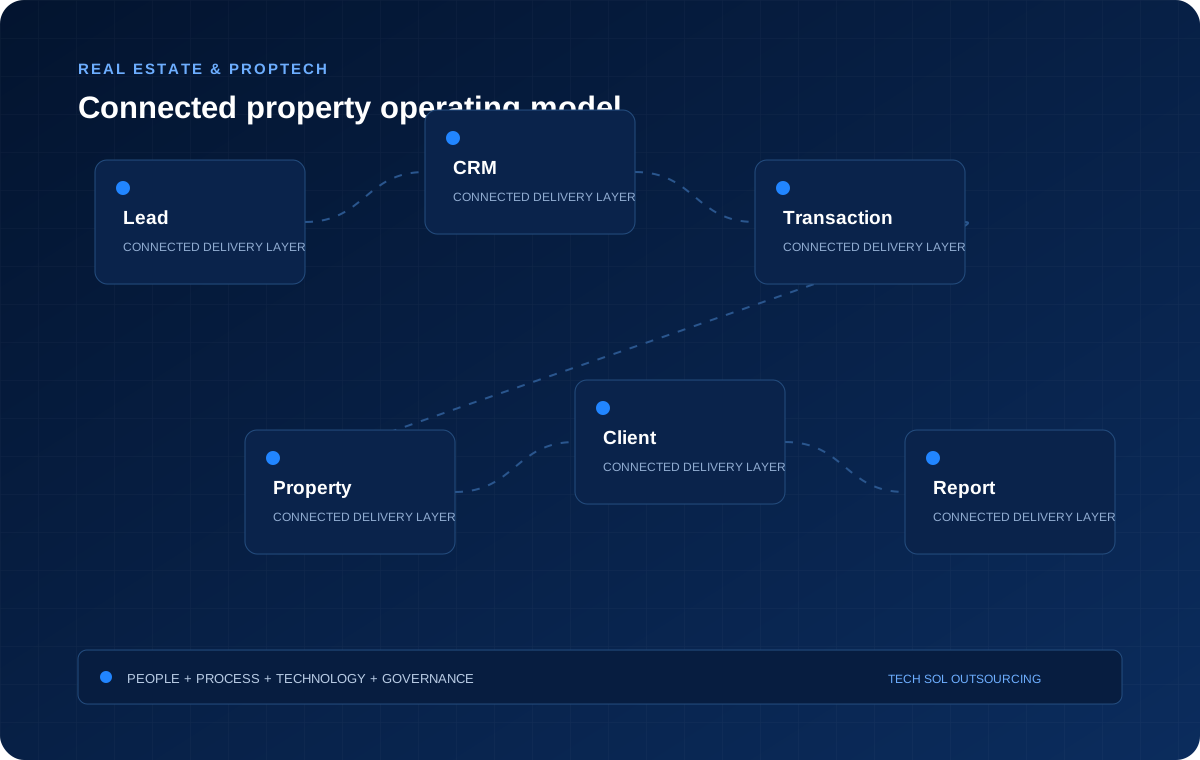
Each capability is defined as part of a larger delivery system. Scope can begin narrowly without pretending the neighboring dependencies do not exist.
Lead pipelines, follow-up, source tracking, appointments, statuses, notes, reporting, and workflow automation.
Inbound response, qualification, follow-up, appointment coordination, CRM discipline, and sales support.
Secure property, transaction, reporting, document, status, and communication experiences.
Web/mobile applications for property, booking, client, agent, owner, vendor, or internal workflows.
Notifications, tasks, routing, approvals, data updates, document flows, and exception handling.
Administrative coordination, records, documentation, scheduling, and process support.
Guest, cleaner, maintenance, vendor, issue, service, and property coordination workflows.
Operational dashboards, pipeline views, property metrics, service status, and data integration.
Select a stage or solution type. The panel changes immediately, because interactivity should be visible rather than hiding somewhere below six screens of static cards.
Capture and route inquiries with source visibility, qualification, response ownership, cadence, and appointment states.
Structure records, stages, activity, ownership, automation, and reporting so the pipeline reflects reality.
Coordinate documents, deadlines, approvals, parties, records, and administrative handoffs.
Coordinate guests, tenants, vendors, cleaners, maintenance, access, issues, and recurring property work.
Provide managers, owners, agents, or clients with useful views of pipeline, operations, exceptions, and performance.
Delivery quality depends on the interfaces between design, technology, people, controls, and operating responsibility.
Website, portals, ads, referrals, marketplaces and inbound inquiries.
Contacts, properties, opportunities, stages, tasks and communications.
Client, owner, agent, vendor, or internal interfaces.
Routing, notifications, follow-up, approvals and data sync.
Transaction, property, STR, vendor and administrative workflows.
Pipeline, service, property, exception and management views.
The engagement moves from current-state understanding to architecture, controlled implementation, evidence-based verification, and an explicit operating handoff.
Inspect the current workflow, systems, dependencies, constraints, risks, and evidence.
Define target architecture, responsibilities, states, interfaces, acceptance criteria, and rollout.
Deliver controlled increments, keep working paths visible, and remove obsolete logic where replacement is required.
Test the real user path, document remaining risks, establish monitoring/support, then scale.
Technology and operational services need explicit proof standards, not decorative diagrams and the phrase “best practices” arranged tastefully around them.
Lead, property, client, transaction, and service data should have clear ownership instead of being duplicated across spreadsheets and inboxes.
Appointments, transaction dates, guest/property events, and service issues need clear timers, escalation, and exception handling.
Owners, clients, agents, vendors, operations, and administrators may require different views and permissions.
Repeated lead leakage, property issues, transaction delays, or service exceptions should be visible enough to improve the process.
Most business systems cross product, infrastructure, data, people, and operations. These related practices can be combined without forcing a monolithic engagement.
Scope should become clearer before implementation starts, not after invoices and architectural archaeology have already accumulated.
Yes, or improve an existing CRM if replacement is unnecessary. The decision should follow a workflow and system audit.
Yes, including authenticated dashboards, documents, statuses, reporting, requests, and integrations.
Yes. Guest, cleaner, maintenance, vendor, issue, and property workflows can be managed as an operational service or supported with software and automation.
Yes. The system and the team executing the workflow should be designed together when both are in scope.
Start with the current state, desired outcome, constraints, and systems already in place.
Share the workflow, product, infrastructure, or capacity requirement. When deployed with the configured Worker and D1 binding, this form submits securely to the website inquiry API.