
CRM Development & Customization
CRM structures, pipelines, records, fields, permissions, workflows, and reporting aligned to the business process.
CRM development, lead lifecycle design, workflow automation, integrations, data engineering, reporting, dashboards, migration, and operational controls built around real process states.
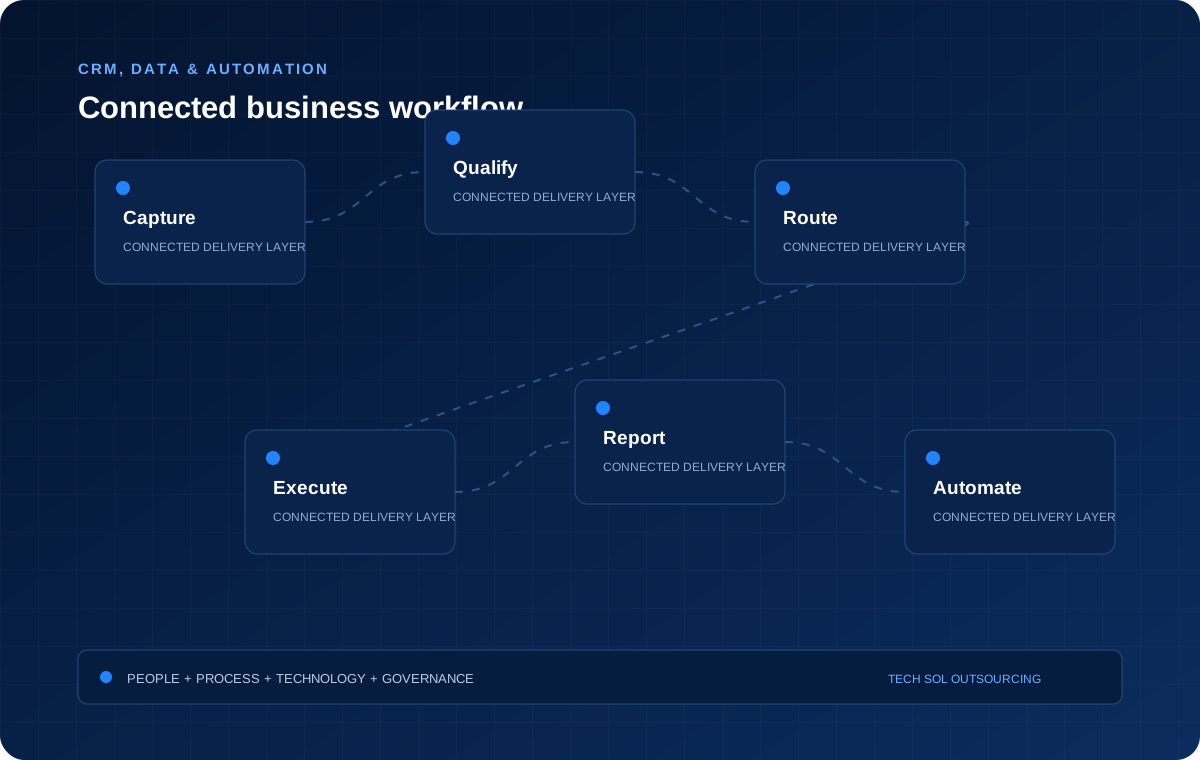
Each capability is defined as part of a larger delivery system. Scope can begin narrowly without pretending the neighboring dependencies do not exist.
CRM structures, pipelines, records, fields, permissions, workflows, and reporting aligned to the business process.
Capture, qualification, routing, follow-up, handoff, conversion, service, and retention states.
Rules, triggers, actions, approvals, reminders, routing, and exception handling.
Reliable data movement and actions between CRM, applications, communication tools, payments, and business systems.
Ingestion, transformation, synchronization, pipelines, and data-quality controls.
Operational views that surface ownership, bottlenecks, throughput, outcomes, and exceptions.
Mapping, cleanup, deduplication, validation, staged cutover, and rollback planning.
Campaign, lead, nurturing, attribution, CRM, and sales workflow automation.
This directory preserves the concrete services behind the broader capability map. Expand a group to review exactly what is included instead of relying on a decorative umbrella label.
Design and customize CRM objects, fields, permissions, pipelines, lifecycle states, and operational views around the business process.
Structure lead capture, qualification, ownership, stage transitions, follow-up, routing, and sales activity tracking.
Automate repeatable business rules, notifications, assignments, approvals, service handoffs, and exception routing.
Connect CRM, communication, finance, marketing, product, and operational systems through governed integrations.
Build ingestion, transformation, synchronization, validation, and processing pipelines for operational data.
Create decision-focused reporting for pipeline health, service activity, operational exceptions, quality, and outcomes.
Map, clean, deduplicate, validate, migrate, and reconcile data when replacing or consolidating systems.
Connect campaign activity, lead management, follow-up, conversion tracking, and customer lifecycle automation.
Select a stage or solution type. The panel changes immediately, because interactivity should be visible rather than hiding somewhere below six screens of static cards.
Standardize where information enters and what is required before it can move forward.
Apply business rules, enrichment, scoring, ownership, and readiness states.
Move work to the correct person, team, queue, or automated action with traceable rules.
Support sales, service, operations, approvals, and follow-up through explicit workflow states.
Expose the state of the operation without forcing people to reconstruct it from scattered records.
Automate repeatable steps only after the process and failure paths are understood.
Delivery quality depends on the interfaces between design, technology, people, controls, and operating responsibility.
States, owners, inputs, outputs, exceptions and handoffs.
Entities, fields, relationships, source of truth and validation.
APIs, webhooks, sync direction, retry and reconciliation.
Triggers, rules, actions, approvals and fallbacks.
Dashboards, audit trail, alerts and operational metrics.
Permissions, data quality, change control and documentation.
The engagement moves from current-state understanding to architecture, controlled implementation, evidence-based verification, and an explicit operating handoff.
Inspect the current workflow, systems, dependencies, constraints, risks, and evidence.
Define target architecture, responsibilities, states, interfaces, acceptance criteria, and rollout.
Deliver controlled increments, keep working paths visible, and remove obsolete logic where replacement is required.
Test the real user path, document remaining risks, establish monitoring/support, then scale.
Technology and operational services need explicit proof standards, not decorative diagrams and the phrase “best practices” arranged tastefully around them.
Each important field needs a source of truth, validation rule, and responsible system or role.
Integrations and automation need retries, error states, reconciliation, and human recovery paths.
Important changes and workflow transitions should be explainable after the fact.
A technically correct CRM that users bypass is not a successful implementation; usability and process fit matter.
Most business systems cross product, infrastructure, data, people, and operations. These related practices can be combined without forcing a monolithic engagement.
Scope should become clearer before implementation starts, not after invoices and architectural archaeology have already accumulated.
Yes. Existing systems should be audited before proposing replacement. Many problems are workflow, data-model, integration, or adoption issues rather than CRM-brand issues.
Yes, where APIs or supported integration paths exist. The design should explicitly define source of truth, sync direction, error handling, and ownership.
Yes, including mapping, cleaning, deduplication, staged migration, validation, and cutover planning.
Yes, for defined tasks such as classification, summarization, qualification assistance, response drafting, or agent actions, provided controls and human review match the risk.
Start with the current state, desired outcome, constraints, and systems already in place.
Share the workflow, product, infrastructure, or capacity requirement. When deployed with the configured Worker and D1 binding, this form submits securely to the website inquiry API.